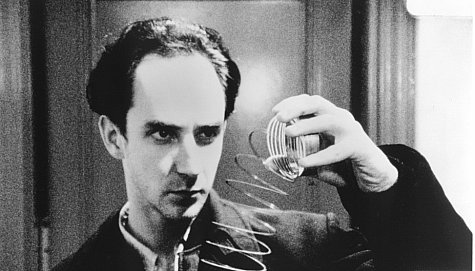
So, how do you mark work then?
Yes folks, it may be the holidays but nevertheless I found myself marking a pile of homeworks this morning... if this sounds like dedication, then it's not really; more a case of not having got round to doing it during term-time.
Anyway, it struck me that marking a pile of jotters can be done in many different ways. It's almost like the Cadbury's Creme Egg "how do you eat yours?" advertising campaign.
Confused? Well, let me explain. You may think that teachers simply mark the jotters in the order that they have the jotters in, which will probably be rather random (having been schlepped home first). But not necessarily. When I first started teaching I was given the advice to try and mark the best homework first (ie dig out the work from the pupil you consider the best) as this is a good way to check that you haven't made any mistakes in your marking scheme. Good advice. But... this may mean that you end up penalising rather minor errors (we dont' want anyone do get 100% too easily, do we?), and then when you get on to weaker pupils you're then struggling to give many marks at all. So care is needed.
Nowadays I do actually mark jotters more or less as they come, until I get down to the last ten or so. Then I have a quick look through the names of those remaining, and save a few good ones for the end. I like to finish on a high note...
I've heard of other equally idiosyncratic approaches taken by maths teachers, and am happy to hear of any more. Own up now to your petty foibles!
(I haven't mentioned here the modern approach of "mark less to achieve more", or "comment only marking". Blimey but I have reservations about this. Apparently when (for example) a pupil makes an error in calculating a gradient, I'm not meant to mark this as wrong, but somehow at the end of the piece of work I'm meant to make some kind of constructive comment instead. Aye, that'll be bloody chocolate!)
Sunday, July 29, 2007


Saturday, July 28, 2007
Maths Teacher Goes to the Movies: The Simpsons Movie
 Finally, a movie that isn't a sequel... er, except I suppose it is of sorts.
How's the movie?
Well, I enjoyed it, but the bar is set pretty high when it comes to the TV show, so I can't help but feel a tad disappointed overall. I mean, it's way funnier than Shrek the Third, but you'd expect that. Plenty of laughs but oddly enough it ends up being the plot that gets in the way, particularly towards the end of the movie. And why so few guest stars? Overall it feels a little like a single episode stretched out, and I'm absolutely certain that the TV show could "do" this plot in 20 minutes, and that it would be more enjoyable for it. By all means go see it, but there are times it's a bit... meh.
Then again maybe I'm being too harsh. It may well be the funniest movie I'll see all year. And they still manage to have a go at Fox Television. But maybe that's part of the problem: the TV show is brilliant at playing with and subverting the medium of TV (if you will), whereas the movie doesn't do the same for the film medium, excepting gags at the start and close of the movie. (One word of advice here: don't leave until the credits have finally finished or you'll miss hearing Maggie's first word - a very funny moment.)
How's the maths
Well, there's an amusing example of Arnold Schwarzenegger coping with very basic arithmetic - encouraging to see he knows that if you double two, you get four.
Can I teach with it?
A large part of the plot concerns a dome placed over the town of Springfield, so there's a few opportunities to pose questions on hemispheres, and maybe even centripetal motion if you're feeling really brave. But the most interesting thing here is how direct proportion doesn't apply: the movie is roughly equal in length to three TV episodes, but I can't help feeling there's more laughs to be had in the latter than the former.
Overall score?
Well, bear in mind it's always difficult to be precise when giving movie ratings, and that any attempt to quantify creativity or enjoyment is doomed to failure... so overall I give this movie e + 1 out of five stars, which rounds (up) to four stars.
Friday, July 27, 2007
Two pi or not two pi?
Hmm... this is interesting, though it's been linked to by others far earlier than me. Basically the author points out that way back when it was decided to define pi as being 3.14..., we would have been much better off defining it as 6.28..., that is to say, two times our value of pi. Apparently a lot of formulae would work out looking a whole lot neater if we did, and radian measure would be much easier: 360 degrees would be pi radians (whole circle = all of the pie!); 180 degrees would be pi/2 (half circle) etc... I can see the attraction. Though it wouldn't clear up the misconception that many students have, when they suddenly decide that pi equals 180 in the middle of an integration question involving trigonometry.
Of course the actual definition of pi as a ratio would need tweaking, but that would be easy enough.
Oh well... missed opportunities, eh?
Of course the actual definition of pi as a ratio would need tweaking, but that would be easy enough.
Oh well... missed opportunities, eh?
Thursday, July 26, 2007
Maths Teacher Goes to the Movies: Harry Potter and the Order of the Phoenix
 Yup, I'm on a roll... shame that it's such a summer of sequels though.
Anyway, on we go for Harry Potter and the Order of the Phoenix, or HP5 if you prefer.
How's the movie?
Well, you know what, I quite liked it. Very dark and not much in the way of action until the end, but I thought the director caught the atmosphere of the book well - and additional kudos for keeping the running time down, given that HP5 is the longest of all the books by some way. Imelda Staunton completely runs off with the film for her performance as Dolores Umbridge - impressive to end up so scary whilst wearing pink - whilst the lead actors acquit themselves pretty well. I mean yes, of course they look too old, but we're well into suspension of disbelief territory here anyway, so I can go with it.
The weirdest thing of all for me was seeing the film in an old style cinema which insisted on having an intermission... very much not appreciated.
How's the maths?
In Harry Potter? Are you serious? A shame I suppose not to see "Harry Potter and the Simultaneous Equations of Doom", or indeed to ever meet a maths teacher. Do they even have them at Hogwarts? Maybe Snape teaches sums in his spare time...
Can I teach with it?
Back to sequel-itis here. You could compare the length of each movie with the respective length of each book, I suppose, and see if there's a connection. This could be as simple as drawing some nifty bar charts, or (further up the road) as complicated as doing a statistical test like the... um... can't remember which one would work... the ummm... "hingummy" test, perhaps?
Overall score?
I'm happy to award the movie four out of five stars (two stars from Gryffindor and one each from Hufflepuff and Ravenclaw - no stars at all from Slytherin, obviously).
Wednesday, July 25, 2007
Maths Teacher Goes to the Movies: Shrek The Third
 (oh that it should come to this...)
Well, heck, what else is a maths teacher to do with their holidays?
And besides, who says maths teachers can't take an interest in popular culture? (I mean, who else kept the fashion flame burning for cardigans and corduroy jackets, if not us lot?) So every now and then, I'll be offering some movie reviews - from an educational perspective, obviously.
How's the movie?
It's fine. It's been pretty harshly reviewed as far as I can see, so I did go in with low expectations. But if - like the good Doctor Mark Kermode of Radio 5Live - your measure of a comedy is that it should make you laugh out loud at least five times, then this movie more or less fits the bill. Obviously there's a law of diminishing returns at work with most sequels - and indeed "threequels", and that's probably the case here. But I was never that much a fan of the first Shrek anyway, to be honest. I mean it was fine, but it wasn't that good. And it's the same here. Don't go in with high expectations, and you'll pass the time reasonably enough. Not exactly a ringing endorsement, but there you go.
How's the maths?
Well, I didn't really see much, which can't be much of a surprise. I guess the title of the movie is worth approving in that at least it doesn't do the silly "Alien cubed" approach. But disappointingly few mentions of differential equations... what is the world coming to?
Can I teach with it?
Well, I daresay a few teachers of other subjects will chuck this in the DVD to keep a class quiet at Christmas. But for maths teachers? Hmm... maybe a little project on the diminishing returns of sequels in terms of quality as mentioned earlier: find a formula for the quality indicator of an "n-quel", where n is a positive integer(*). Is the relationship one of exponential decay? Is it linear? Does Hollywood even care, when the cash register keeps ringing?
(*) Blimey, just realised, what with the business of "prequels", I suppose n could be negative too... and I suppose "Die Hard 4.0" introduces the idea of sequels being rounded to one decimal place. And I've sat through any number of irrational sequels...
I'll get my coat.
Tuesday, July 10, 2007
On holiday
Jings, crivvens and help ma boab, but this blog is almost a year old. There's a thought. Started last year whilst bored during the holidays, and now here we are again. Not that I'm bored. heck no. Just recharging the old batteries, and kicking back. I mean to say, is there a better time of year than the end of July, when hairy Scottish teachers get paid for a month of not working?
By the way, if you are ever bothered by friends complaining about the amount of holidays teachers get, don't bother trying to explain how hard you work at other times/how stressful the job is/etc etc - just say "yes, I know, it's terrible isn't it?" Believe me, it's much more annoying that way.
By the way, if you are ever bothered by friends complaining about the amount of holidays teachers get, don't bother trying to explain how hard you work at other times/how stressful the job is/etc etc - just say "yes, I know, it's terrible isn't it?" Believe me, it's much more annoying that way.
Saturday, June 23, 2007
Stuff
My, but there's a lot of blogs out there in Maths-land! For someone like me - who ends up saying "times" instead of "multiply" on a bad day - the maths can be rather high-powered, but all the same there's some fascinating material out there. When I remember how to add links to this site, I'll list a few.
Meanwhile, this leads me nicely into linking to an amusing maths video link here - scroll down to the second clip. Made me laugh.
I might even try to show it to some of my classes this week, as they begin to demand that they be allowed to play games etc as the end of session approaches. After all, they've been watching DVDs in History and RE for ages now... but never fear, we maths teachers are made of sterner stuff, and keep the little darlings busy to the end. More or less.
-
Saturday, June 16, 2007
Letters to my mathematics class, volume two
(With apologies to Dr "Bones" McCoy of Star Trek - "dammit Jim, I'm a doctor, not a bricklayer!", this is more of a postcard than a letter... but any teacher will recognise the sentiment.)
Dammit class, I'm a teacher, not a branch of WH Smiths!!
-
Dammit class, I'm a teacher, not a branch of WH Smiths!!
-
Saturday, June 02, 2007
Hands up, baby, hands up...
(Apologies for quoting terrible lyrics from way back... the blog goes tabloid!)
So, someone somewhere in "the government" has issued advice, apparently, telling teachers not to ask pupils to put their hands up to offer answers to questions, because (apparently #2) some pupils get left behind if you do this.
Hmm.
Well, some initial thoughts.
First up: are we talking UK here, or Scotland? I can't be too bothered to try and find out, but given that I heard about this on BBC 5Live, methinks this is probably south of Gretna. In which case we can just ignore it.
But honestly, chances are, this is yet another media misrepresentation of a small part of advice to teachers regarding the importance of varying their techniques for Q & A sessions (or "direct interactive teaching", if you're writing your cv).
Getting pupils to put their hands up does have its place. For one thing, you get a quick idea of how much pupils are understanding (or how many of your class are still awake - all useful stuff). If you only ever have a couple of hands up, then you need to vary this, 'cos something is clearly not right.
For example, I sometimes use a calculator to throw out a random number, then ask the next question to the pupil corresponding to this number in my register. Keeps the class on their toes, I can tell you! And if this sounds cruel, well... (a) yes, and your point is? (b) who says I'm honest? I know my classes well enough that if I think wee Johnny can't answer I'll either ask a different question or just say another number has come up. (The key thing here is to generate the number away from the gaze of the class, and ask the question AFTER you've seen who's in the firing line.)
There are loads of other ways of assessing pupil understanding, but asking for hands up is hardly a criminal offence.
It really gets my goat when certain people (maybe the media, maybe even teachers) seize on one aspect of teaching and think this is or isn't the definitive answer to all our prayers.
Let's be sensible.
-
Sunday, May 27, 2007
Letters to my mathematics class, volume one
Dear class
OK, so you’re in shock, because this is what we call a “letter”… a special form of written communication. I doubt you’ll be familiar with it, but hang in there. It’s just like a text… though u have 2 cope with proper English, which I accept might not be gr8 fun 4 u.
So, you’re wondering how to improve in mathematics, eh? Well, OK, you’re not, but all the same, there are a few simple things you could do that might transform your mathematical ability. It’s not rocket science (that’s upstairs with Mrs McGinty in Physics – don’t forget your fire extinguisher, cos she’s getting on a bit), so why not give it a try.
First up, the equipment. Yes, that’s right Johnny, there are things that you are expected to have with you in your mathematics class. But don’t worry, I’ll explain them as we go along.
Item number one: the pencil
We use these to write with, for the most part, though a good chew on the end of your pencil can keep you going ‘til lunchtime if you’re getting peckish. You’ll have seen pencils before, because I’m forever bloody lending you one, but you know what? You can actually buy these from things called “shops”. They’re not expensive, though granted once your parents have forked out for a new X-box/mobile phone/Wii/pair of trainers, I can appreciate that there’s not much cash left for the non-essentials in life. Maybe you could ask your lawyer, sorry, Guidance teacher if you qualify for financial assistance. Or maybe you can just nick one off Nigel, like everyone else does (but get there early, for much as Nigel wishes his pencil case had TARDIS-like qualities, it doesn’t). But either way, get something to write with, specifically a pencil. Let’s face it, you’re going to make mistakes. So no pens, please. Specifically, no yellow, red, lime-green, scented, glitter dusted, honey-smoked, cinnamon flavoured pens, gel or otherwise.
Now I know what you’re thinking: why can’t you just borrow one from me, like you do all the fecking time? Well, it turns out there’s a limit to the number of wee pencils that your teacher’s allowed to steal from IKEA – who’d have thought it? – and with council cutbacks being what they are, it also turns out we have no money to buy them in ourselves. Yes, we do have funds to buy interactive whiteboards, but not pencils. Go figure.
I’ll sign off now, as I need to lie down, but don’t worry, I’ll write again soon, this time to tell you about the exciting technology we’re calling a “ruler”.
Letters to my mathematics class... coming soon
I see from a review in the Guardian here that the mathematician and writer Ian Stewart has a book out in paperback called “Letters To A Young Mathematician”. Nice idea, Ian! Way to go, etc.
But those of us at the chalkface (or interactive whiteboard face, if you prefer, though it doesn’t have the same ring and whiff of dust to it) know that this can be taken further. Oh sure, by all means write a book for young Nigel the maths geek… but what about the rest of the class? What about Wayne, who wouldn’t know a quadratic if it fell on him from a great height? What about Nikki (two Ks, two Is), who currently has her book upside down? And what about Lee, who has his finger up his nose?
Fear not, people, for the-proof-is-out-there is here to help. I give you… letters to my mathematics class. Enjoy.
(Posts to follow, honest!)
Friday, May 25, 2007
Higher musings
OK, late again, but better than nothing...
General consensus for this year's Higher Mathematics exam was that it was more or less OK, if a bit... meh. Kids found paper one (no calculators, folks!)** pretty straight forward, whereas paper two was more challenging. My first sight of paper two left me a bit concerned, but I think the questions looked worse than they actually were once you got down to it and gave it a go. But three questions in paper two on logs/exponentials? That's a bit weird.
Mind you, if you're going to make one paper harder than the other, at least they got this the right way round. If I was being picky I'd say paper one was too easy, but I suppose they made up for it later.
There you go.
(** unless of course you are allowed to use a calculator in the non-calculator paper... don't get me started, I'm saving this up for another time)
Monday, May 14, 2007
Jings, yet again...!
I've raised before in this blog the question of how important understanding is when you are teaching new methods in maths. I have a suspicion that for many people understanding actually follows rather than precedes the ability to carry out, say, an algorithm in multiplication. Does it matter if we don't understand the theory behind it? Well, some say it does, and in parts of the US new curricula are being developed that attempt to remedy this seeming problem.
I have to say I'm worried.
I thnk we've been here before, with the idea that pupils are meant to "discover" maths for themselves. Don't get me wrong, I like an investigative approach as much as the next mathematician... but there are surely limits to what can usefully be created in the time available. To put it another way, if you want the students to discover the maths, you'd better give us a lot more time in which they can do it. And besides, are the standard algorithms really so bad?
But hey, why listen to me on this, when you can see what I'm on about here.
Friday, May 11, 2007
So how was it for you?
Well, I suppose I can't really keep a blog on maths teaching in Scotland and not comment on the SQA exams, so it's probably time I gave my thoughts on the Standard Grade papers from last week. Feel free to disagree.
Overall they were fine, sort of, in that they were reasonably free from daft questions that are so non-standard that very few pupils will get anywhere with them. In years past there have been a few real beezers, the sort of questions where you despair of the setters, because you can't believe a teacher working "at the chalk face" wouldn't spot straight away that something was badly awry. This year was fine in that respect.
Relatively speaking, I think the hardest paper was actually the Foundation one (the "easiest" level by far), where the level of numeracy expected was quite challenging for the pupils concerned. (There's a real problem with maths at this level: in most other subjects pupils end up with grades better than Foundation, whereas we see kids actually failing at this most basic level. But that's a discussion for another day.) The General paper was a skoosh, and as for Credit...
Well, initially I was pleased because, as I've said above, there were no daft questions. But upon reflection I have to say now that I think the exam was just too easy - and believe me, I don't often say that. In particular, the level of algebraic skills required was way too low and there was no hefty manipulation (quiet at the back) which would help to really test a pupil's algebra at this level.
Now OK, maybe SQA will raise the cut-off scores to reflect an easier exam, but all the same I'm worried that we're going to have pupils with a Credit grade who don't really deserve it - and, these pupils are then going to attempt Higher next session, thinking they're doing well. Recent SQA statistics show that fewer than 50% of pupils with a grade 2 at Credit (the lower of the two possible pass grades) manage to pass the Higher in fifth year. I don't see how this standard of exam is going to change that depressing figure.
(Mind you, if my class don't get good grades come the results in August, boy am I going to be mad! Talk about setting yourself up for a fall...)
Key question: if we want to improve the standard of maths education in Scotland, do we have to award fewer passes - at least, to begin with?
Hmm.
Monday, May 07, 2007
Still alive...
You can't keep a good blog down... or something.
And so, after a 2 month hiatus, here we go again. Well, I've got to have something to do on exam leave, haven't I?
So...
And so, after a 2 month hiatus, here we go again. Well, I've got to have something to do on exam leave, haven't I?
So...
Tuesday, February 20, 2007
How To Be Good
Maybe it's because elections are almost upon us here in och-aye-the-noo Bonnie Scotland, but by jings there's a fair old whack of stuff being written and proposed by our lords and masters about A Curriculum For Excellence, the keystone, lynchpin and corner... er, stone of the new education thingy.
Only trouble is trying to nail down precisely what we're meant to be doing, but let's leave that be for once and concentrate instead on some of the perfectly laudable aims of the document. We are, it says, in the business of trying to produce weans who are (now, let's see if I can get this right - I know there's four of 'em):
- effective learners
- confident individuals
- somethingy somethingy contributors
- and, er, something else about citizens.
(You may be less than impressed but let me assure you, I'm batting higher than most teachers here.)
Anyway, the thing is, most teachers tend to concentrate only on the first of these: getting the wee beggars to read, count, whatever. Fair enough, cos this is the business we're in, after all.
"Aha!" say the powers that be, "But that's the point: what about the other three things you should be doing, eh? What about them?"
Well, indeed. Y'see, what I'm interested in/worried about is, underneath this is a perfectly decent desire to turn out young adults who are... well, let's not beat about the bush here... who are "good". Good, in the sense of having morals, principles, caring about others etc etc.
And the really really really big thing is: will someone please tell us how you do that?
How do you teach someone to be good?
Honestly, any ideas?
I hate to be wishy-washy here, but the best I think we can hope for is to be good ourselves, and hope it sort of rubs off. (Define "good", you ask? Now that's another entry entirely.)
I don't think goodness is a subject you can teach; nor do I think that knoweldge necessarily makes one good. As George Steiner is fond of pointing out, the guards at Auschwitz really loved their classical music...
To be fair, a working document on citizenship has been released which I think does a good job of a difficult area. But... it's quite something to try and promise to an electorate, isn't it?
Watch this space.
Saturday, December 16, 2006
Jings, crivvens, help ma boab
Well at least the guy's not Scottish... listen here for an actual recording of a phone call with some truly astoundingly bad mathematics...
Saturday, December 09, 2006
Alive and kicking, honest
Jings! Nothing gives you a quicker "kick up the z-axis" (as a friend of mine likes to say) than realising that you haven't blogged in a while. So, this is a holding entry, just to say hello to whoever may be out there and reassure you that some form of normal service will be resumed - maybe after I've finished marking S4 prelims?
In the meantime, many thanks to the student (I think) teacher who has commented (twice!) on the entry "extreme excitement for maths teachers of a certain age": yes, indeed, these are much loved books and still in use across the country, albeit behind the scenes. (We tend to get a bit embarassed about using them as class sets, but a bit of illicit photocopying never did anyone any harm!) If you have a complete set, guard them with your life. Or perhaps a small first-year pupil. Whatever.
When first I started this blog I had wondered about peppering it liberally with advice for newbies - is there a market I wonder? Well, let's find out. Some thoughts on discipline - oops, I mean classroom management! - coming next week.
Sunday, November 19, 2006
Is anyone counting?
Some more thoughts, then, on the whole "I don't know, kids nowadays, they can't even add up" business.
I'm not entirely disagreeing with these sentiments, but what frustrates me is that I know - know, dammit! - that the kids in front of me nowadays can actually do more in the way of mental arithmetic, or simply without a calculator, than they could when first I started teaching.
Y'see, when first I hit the chalkface, the exams in maths at school could all be done without a calculator. Now of course we did still teach pupils the basics of arithmetic, but they quickly worked out that if they were allowed to ue a calculator come the actual exam, they were going to darned well use the calculator in class too. We did what we could to stop them but, being mathematicians, we had to admire a grasp of simple logic. Naturally enough, quite a few pupils then started using the calculator for everything: why work out 6 times 9 yourself when the calculator will guarantee the right answer? (And - still the case today - why bother even considering if the answer seems reasonable? Would the calculator ever lie?) So it came as no small wonder that we were turning out a nation of somewhat less than numerate children back in the nineties.
Ah, but then. Then someone somewhere decided the Thing To Do was to give pupils exams which had to be done in two parts: one with our electronic chum, one without. Hurrah! we cried, and set about teaching percentages, fractions etc etc with renewed vim and vigour. All seemed well. All was well. I remember teaching a lower ability class in S3 with an S6 prefect helping out, and I well remember the prefect telling me that she didn't really know how to do half of the stuff these less able pupils were managing. Result!
So, dear general public, rest assured that we do teach tables; that the kids in class do know how to do a fair bit of what "we" used to be able to do standing on our heads.
But.
Nevertheless, I have to agree, pupils emerging out into the world of work nowadays simply are less numerate. And I'm really not sure there's much we can do about it.
Why?
Well, as I've mentioned before, in this electronic age, there's simply little or no opportunity for pupils to use or practise these skills out in The Real World. I mean, when last did you seriously - seriously - have to add up some numbers, or do a long multiplication, or add (multiply??) fractions? These kids can do the arithmetic well enough to pass exams, but the skills then atrophy through misuse.
Like it or not most of us rely on electronic aids more than we'd care to admit. Those of us Of A Certain Age do still have reasonably high levels of numeracy, but only because (a) it was about all we ever did in school for the first seven years and (b) we did have to use these skills to a certain extent in everyday life.
Those days are gone.
It would be nice to think that this then frees us up more to concentrate on less mundane skills in maths - on more reasoning, for example - but it may well be that the ability to reason follows the ability to execute the basics with confidence.
To put it another way, we're screwed.
Or maybe not. Does all this matter in the larger scheme of things? And were we really so good at arithemtic back in the day? (Take written English for comparison: OK, so a lot of kids nowadays can't spell or use basic grammar, but reading other teachers' reports I do wonder if 'twas ever thus.)
Discuss.
Tuesday, November 14, 2006
It is indeed an honour
Well folks, take a look here at a posting from a while back, and a comment - just received today - from the good professor Howie himself! Well, he claims to be, at least, and I choose to believe him. Oan yersel', big man! etc.
(If anyone knows how I can get recent comments to appear summarised in the sidebar, do let me know.)
(If anyone knows how I can get recent comments to appear summarised in the sidebar, do let me know.)
Subscribe to:
Posts (Atom)