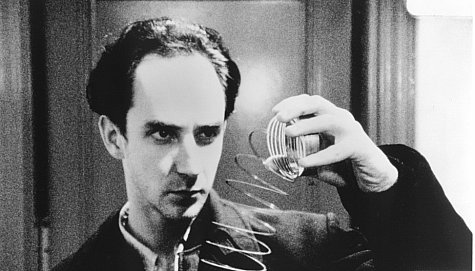
Monday, November 05, 2007

Maths Teacher Goes to the Movies: Sicko

Now bend over... this may hurt a little.

There's been an impressive amount of anti-Michael Moore stuff out there of late, most of which is, it's surely only fair to say, right-wing propaganda. It's also fair to say that Moore does play fast and loose with facts from time to time, but rare indeed is the documentary film-maker who doesn't arrange the facts in the way that best supports their point. Fahrenheit 9/11 was one hell of a movie, as was Columbine... heck I could probably still sing the guitar-riff theme tune from TV Nation, his TV series way back when. So, declaration of interest up front: yes, I'm a fan.

How was the movie?
Well, this is a bit odd. I was pretty depressed to be reminded just how awful US "healthcare" is, and I was moved to be reminded of just how great the NHS is, in comparison (yes, people have complained that Moore presents a sanitised NHS, but listen carefully and you will hear nothing that's a lie)... but at the end of the day I was just underwhelmed. Maybe it's because there's no clearly visible Big Bad to get angry at, though Bush and Co. do lurk in the background. Or maybe it's just because you can't see for one second how things are ever going to change over there. I'm not sure. But - oddly for me - I felt that this was one documentary I could have happily waited for on telly. Not enough laughs either.

How's the maths?
Gosh, I can't remember. There's a fair amount of figures and percentages flying around, which counts for something, but the only equation I recall is (desperately poor people) x (high insurance premiums) + (refused claims repeatedly) = (filthy rich capitalist gits).

Can I teach with it?
Well, wouldn't that be fun? Seriously though, if I used this with a class and analysed healthcare costs in the US in a way which (let's say) puts across a pro-liberal agenda, would that be acceptable? Or if I did the same with party political matters in the UK? "Hey kids, let's analyse which party is more reliant on private donors and look for a positive correlation with peerages!" Would that be part of A Curriculum for Excellence? I'm sure Alex Salmond wouldn't mind...

Sunday, October 28, 2007

Man bites dog

Wow... an academic (I think) is claiming that there is too much exaggerating of the figures for bullying in our schools - as in over-exaggeration. It seems that we are guilty as a society of wrapping our children up in cotton wool, instead of getting them used to some of the hard knocks which life will throw their way. (Hey, it's my blog, so I can mix metaphors all I want.) See here for the article in the Guardian reporting this.

FWIW, I agree a far bit. I'm impressed by how much is done to combat "genuine" bullying in schools (compared to in my day), but I do think that some parents can have unrealistic expectations of how much the school can do about "lower level" stuff - name-calling and so on - and how quickly the bullying tag can be applied to stuff which is more your everyday sort of sometimes-kids-can-be-wee-beggars. (Which isn't to say that name-calling can't be devastating, either, in some cases.) Encouraging kids to stand up for themselves is surely a good thing (that, and perhaps karate lessons).

Tuesday, October 23, 2007

Read 'em or weep

What, can't a blogger go on holiday?

OK, so I'm back. And impressed by Channel 4's current week of programmes on literacy (I think you'll find it here). Can't quite decide yet if Ruth Miskin, the woman with the mad evangelical gleam in her eye for a particular style of teaching kids to read is mad or... well, no, she is bonkers, to some extent, I don't think that can be disputed but still... hmm... it's sobering and also inspirational stuff.

Of course this has nix to do with teaching maths - does it? Miskin's prescribing one method which should be used alone, to exclusion of all others, for teaching reading (called synthetic phonics, at which point I'm guessing she's asking for your credit card number) - one teaching method to rule them all, and in the darkness bind them, sort of thing.

And I do sort of see the point for the (non-PC language ahead alert!) less-able, even in maths. I mean, with my more able classes we can have a fairly interesting time discussing different methods or ways of setting out a solution to a problem, but I tend not to give that freedom to the less able, because they seem to thrive on the safety of knowing that this is how you're meant to do it. OK, so they thereby miss out on some of the vast richness of the subject but... if it means they can work out a percentage without a calculator, I reckon I'll take the trade.

I can't help but wonder if there's going to be a ground-swell of opinion in favour of teaching reading this way, on the back of such a high profile media campaign which (as far as I can see so far) backs it. It's a shame it has such a ring of "back to basics" about it though.

Tuesday, October 02, 2007

A Curriculum For Mince?

OK, maybe I'm being a bit harsh, but the much heralded "numeracy outcomes" for ACE (as those in the know call it) are now out, and boy, you might just as well try to nail jelly to the wall as get a grasp of these beauties. Those of you working in schools needn't dash off to find which member of the Senior Management Team has received the paperwork and is hiding it in a cupboard somewhere, as - of course - the outcomes are available online. (Is it just me, by the way, or is it not an appalling dereliction of duty and responsibility for major public organisations like LTS and SQA to unilaterally transfer the copying and printing costs on to already-cash-strapped schools?)

So, you can find them - and various other bits and bobs - here. Early response from maths teachers I know is basically "despair". We shall see. More to follow.

Sunday, September 30, 2007

Maths Teacher Goes to the Movies: Atonement

A bit late in getting to see this film, I admit, which is perhaps a curse rather than a blessing as I seem to have forgotten any negative reviews and went in with high hopes. And for the record, before we begin, I haven't read the book. So:

How's the movie?
Well, let's be fair and say that it all looks terribly, terribly nice up there on the screen - or should I say tahbly, tahbly ness, in keeping with the movie accents? There's some impressive cinematography, but by heck they want you to know about it, so it's hard to lose yourself and get really caught up in the story. I believe the book unwinds in a tricky manner that lets on from the outset that one of the central characters is telling the story, so it would be nice to think that what was going on here was that the film-makers were playing with the idea of someone making a film about the story... but that would be crediting them with more than they deserve.

The film hinges on a misunderstanding (wilful or otherwise), from which follows much woe - gorgeously cinematic woe, never fear - but to be honest it's hard to care over much, or not to feel at the end of the two hours that you really didn't need to bother. Whereas a misunderstanding offers much in the way of comic potential, there's not many laughs to be had here - although there were titters from the audience at one point in the film which I think was meant to be very erotic.

So anyway: go see it if you want. It looks nice; the actors do their bit; war is terrible; atonement is... well, what exactly I don't know and nor do they; and that's your lot. Can they have a Bafta now please?

How's the maths
Oh, dahling, I'm afraid everyone's far too frightfully posh or clever to talk about mathematics - don't be such a bore. Pass me another ciggie, won't you?

Can I teach with it?
Well, in the movie world time is seldom linear and much more a big ball of timey-wimey stuff, and seldom more so than here, as the scenes jump forward and back over (eventually) about 70 years. A chance then, surely, to apply negative numbers in context: let the initial scene have value t=0 (years), in which case (ooh, here comes a flashback) this must be t=-2, and then boom! it's Dunkirk so t=3, but wait now (blimey! it's Vanessa Redgrave) t=70... and so on.

However, be warned: the central conceit mentioned earlier does include a letter from one character to another, containing the use of a certain four-letter word (and not the one starting with f, either) ... and I think you can safely wave goodbye to your teaching career if you let that crop up during the DVD. All the same, I daresay the History department will happily borrow it from you in order to show that war is A Bad Thing.

Wednesday, September 26, 2007

Tum te tum...

Jings but time flies, eh?

Those headlines again... um... I've been busy.

More on that story later.

Tuesday, September 11, 2007

Math wars - coming to a school near you?

Well, OK, I exaggerate for effect. But by jings, this is all very interesting. Basically there's a war raging in the US over how maths should be taught. No surprises that it's a sort of traditional v modern thing, but the extremes are pretty extreme, and if reports are to be believed then there is a real question over whether or not students are being damaged in the crossfire.

See here
and here
and here
for a few details/comments/op-eds, though be warned that these are pretty one-sided (even if they do seem fair enough to me, but what do I know?).

I'll post my own thoughts later, but would be glad to hear any comments from colleagues from the US in the meantime.

Maths Teacher Goes to the Movies: The Bourne Ultimatum

Well, in a summer of "threequels", finally a movie that does what it says on the tin. No more than that, mind you.

How's the movie?
Pretty exciting stuff - certainly never a dull moment. Lots of gripping set pieces, all filmed in shaky Steadicam (that's not-at-all-steady Steadicam, then), with fast editing in all the fight and chase scenes. Basically you have no real idea what's happening in these moments, but it sure is fun to watch. There's a visceral confrontation between Bourne and a hitman that'll leave you gasping for air. When the movie slows down enough to start to wonder about delivering a plot, it's maybe no surprise that it opts to rerun that of the second Bourne movie. But who cares? I mean, can you remember the plot for any of these, beyond the basic amnesia thing?

Rating?
In keeping with the Hollywood belief that hi-tec needs many decimal places to sound cool, I'll give the movie 7.00000000001 out of ten.

To be critical I would say that the movie could do with more warmth, in terms of human relations. Julia Stiles pops up again and does her best, but a brief hint of a romantic past goes unexplored and before too long she's off dying her hair in order to vanish from the baddies (meanwhile Matt Damon continues to look like Matt Damon, complete with Action Man haircut, yet the authorities never ever recognise him until he bursts in, guns ablaze) and the movie moves on apace to the next loud moment.

How's the maths?
Not too much on the go, though lots of hi-tec stuff kicks around and I suppose there's all manner of projectile motion going on, what with the guns and stuff.

Can I teach with it?
Well, morally, would you want to do an exercise on bullet trajectory with a class? Alternatively, maybe a brief probability study, with null hypothesis "the bad guys can't shoot for toffee" tested at varying degrees of significance.

Wednesday, September 05, 2007

Meanwhile, back at that press conference...

The story so far...

Alert readers of our humble blog will recall that in a recent press conference with Gordon Brown, President George W Bush was asked the key question: what is 37 times 23? The good Mr Bush gave what can at best be described as an evasive answer (see here if you've forgotten). But we here at TPIOT are made of sterner stuff, and so we recently managed to sneak into a recent press conference, bribe the PR guy with several twinkies, and ask the question again.

Now, dear reader, read on...

(Transcript of press conference follows)

TPIOT: Mr President! Mr President!

GWB: Yup, the... um... the geek with the glasses. Yo! Whassup, dude?

TPIOT: Mr President, back in July at a press conference with Gordon Brown...

GWB: Yup, I remember. Scottish guy. Big. Not dour.

TPIOT: That's right... anyway, at this press conference you refused to give a definitive answer to the question, what is 37 times 23? I was wondering if, now you've had time to read the reports, you might have an actual answer?

GWB: Um... well, yeah, kinda. Me an' the boys bin kickin' this one round for a while. I mean, I'm no mathematician, right, but we called in the experts and I think it's maybe time to set the record straight on this one. We dun looked at this from all the angles, and though we're not prepared to say exactly what 37 times 23 is, we can reveal that the answer is... an even number.

TOPIT: An even number.

GWB: Bullseye! Now we ain't ready at this time to reveal just how big this even number is, but we at least hope that y'all will give us credit for the progress we made so far. Knowin' that the answer is an even number... well, sir, that kinda military intelligence takes years of hard work an' countin'. I mean, just getting' all them fingers in the same place, so we can count on 'em.... makes me proud to be an American. Next question?

TPIOT: But Mr President, isn't it generally accepted that, if you take an odd number and multiply it by another odd number, the result will be odd itself?

GWB: (audible sigh) Y'see, this is exactly the kind of... um... unpatriotic line of questionin', that makes me wonder if you even care about the war against terror. Oh sure, the liberal elite will tell you that an odd times an odd is odd, they've always believed that... but the rules have changed, son, the rules have changed. 9/11 put paid to that. An' y'know... this kinda talk, it's just emboldening the enemy, is all it's doin'. You gotta trust me on this one.

TPIOT: So, 37 times 23 is even?

GWB: Welcome to my world, son, welcome to my world.


Maths Teacher Goes to the Movies: Knocked Up

Well, what do you know, but I finally managed to mark enough orange jotters to be able to take a night off and go see this... apparently it's been a big hit Stateside, and been well here too. What's not to like?

How's the movie?
Meh. I mean, it's OK and everything, but I really couldn't care too much about what happened to the lead characters, which is a bit of a downer in a romantic comedy. Everyone was a tad too self-obsessed, and overall the movie seemed to want to have its cake and eat it (or, perhaps, to have the bun in and on the oven?), in terms of portraying how empty our lives are when we are stuck in long-term relationships going nowhere (speak for youself, mister!), yet still give us the pat happy ending. And then all of a sudden in the midst of the angst comes an avalanche of bong-themed stoner jokes more at home in American Pie. In a word: confused.

Still, by the good Doctor Kermode's litmus test for a comedy: I did laugh out loud several times, so who am I to complain? But it's far from being a classic.

How's the maths?
Well, any number of variation on multiples of four weeks abounded, with a maximum being reached naturally enough at 36, more or less. But not much else.

Can I teach with it?
Lordy no! far too many swearies for that, even if you are a Biology teacher.

Saturday, August 25, 2007

Well, hello...

This, folks, is a certain Danica Mckellar, who may be known to people on the other side of the water in the US. She's an actress, and a mathematician. (She's also apparently released a yoga/meditation DVD, but let's pass over that in dignified Wittgensteinian silence, shall we?)

And she's written a book on maths. Sorry, math. (I recall an American friend and teacher saying to me, "yup, we only have the one subject in the US".)

And it's called... wait for it... "Math Doesn't Suck".

This has to be a good thing, surely. Ms Mckellar is apparently keen to reach teenage girls with the message that mathematics is a subject that can appeal to them - in a nutshell, I suppose (and trust me, I'm not being facetious, it really is her point): babes can do math. More details of the book etc can be found here.

Ms Mckellar, we here at TPIOT salute you, wish you well in your work, and are proud not to have descended too far into Leslie Phillips territory, despite an overwhelming urge to say something like "ding dong".

Oops.

Thursday, August 23, 2007

Lemon-soaked paper napkins

Jings but things have been busy. Nevertheless we here at The Proof is Out There wish to apologise for the hiatus in bloggery over the past week. Rest assured that we are working hard to overcome this problem and that normal service will be resumed as soon as possible.

In the meantime, here is some music.

Thursday, August 16, 2007

Choose a job you love...

... and you'll never do a day's work in your life.

Old Chinese proverb, apparently. And on a good day I absolutely believe this to be true. Worth recalling now I'm back at work.

Oh, and one other thing - it's also worth mentioning that ants dance a mean samba. How could anyone disagree?

Sunday, August 12, 2007

Round up

A few sites worth checking out... first up, Vlorbik is hosting the XIV Carnival of Mathematics here. This is a round-up of all manner of maths-related websites and I'm honoured (or should that be honored) that this humble blog has been included.

On the back of this mention, I'm chuffed to bits that the joke press conference (Bush & Brown) has now been linked to by some other bloggers too... see here for an American educationalist's take on the TIMSS business, and here for the sheer joy of this blog making it into what I think is the Dutch language. Dank U!

And finally, a mention of reel fanatic's movie-review blog here. Sure, the blogosphere is heaving with many such sites, but I like the choices, and admit to having a soft spot for Macon, Georgia.

Thursday, August 09, 2007

Maths Teacher Goes to the Movies: Hairspray

OK, I know it's remiss of me not to have seen this one earlier, but it's amazing how busy one can be on holiday. Anyhoo, finally managed to see this the other night and was surprised by how good business was - not quite a full house, but not bad for a movie three weeks or so after opening.

It's always interesting catching up with a film later on, because by then you've heard quite a few reviews and comments from friends, all of which can work for the film or indeed the other way. Going in, I knew the following: (a) it's a film of the musical based on the earlier Hairspray movie; and (b) it's got John Travolta in a fat suit playing a woman. (At least, I hope it's a fat suit... you don't think he did a Rene Zellwegger, do you? I mean, Mr Travolta's a man who likes a meat pie at the best of times but... no, surely not.) Oh, and just to clarify: I have not seen the original John Waters movie, though I know enough to be able both to bluff about it and to spot Mr Water's (very appropriate) cameo appearance in the new film.

How's the movie?
Well, it's not at all bad, so long as you don't mind musicals of course. It is loud (very loud) and colourful, but like so many musicals there isn't much variation in tone. Hard to know what you can do about this, to be honest. Musical theatre needs to play to row Z, so subtlety's not really an option. But I came out pretty happy, having "gone" with the movie. A few days later and I can only vaguely recall a couple of tunes, but it all seemed passable enough at the time. Newcomer Nikki Blonsky is very good indeed, Christopher Walken does his usual schtick (though not enough dancing, if you ask me), Queen Latifah gives it big laldy... and it's certainly nice to see Michelle Pfeiffer in a movie again.

However... let it be said the really wrong note in the film is the afore-mentioned Mr Travolta himself. Oh dear. First up, his accent is absolutely all over the place, though no matter where it wanders I can't help but think he is channeling Dr Evil from the Austin Powers franchise. Nor can he sing particularly well. And I'm sorry, but in a film which is at least in part (it seems) about challenging society's views of (ahem) fat people, what the hell's the point in then simply inviting us to laugh at JT padded up and out as a fatty? In the original film this part was played by the cross-dressing transexual Divine - who was that size - which perhaps also allowed the movie to touch on even wider societal hang-ups, but no such allusion is possible here. A case of Hollywood (if not JT) wanting to have their cake and eat it, I suppose.

How's the maths?
Zip, zilch, nada. Nothing to see here. Move it along folks.

Can I teach with it?
Well, if you teach History or Modern studies, this movie could lead into a discussion regarding issues of race in 1960's America, but you'd be brave to try it, because apparently all we need to do is to get down and boogie. Or something.

Tuesday, August 07, 2007

Results, results, results... part two

OK, settle down, this might be a long one.

A quick recap: first up, the structure of Scottish education, exam-wise. In fifth year (a bit like year 11 down South - the first year of the two year A Level?) able pupils will sit Highers; in sixth year pupils can then choose to sit Advanced Highers (very much like A Levels, though probably a bit harder to be honest... I would say that, being Scottish), or perhaps more Highers in other subjects. or a mix of both.

But! according to the news today (see here, for example), the number of students choosing AHs is down on last year, much to the (apparent) consternation of universities. How can this be?

Well, two reasons, both of them pretty accurate if you ask me:

1. It's the universities' fault
It's a bit rich of the universities to complain about this situation, given that they use the Higher (NOT the AH) as the benchmark for university entrance. When the structure of our exams was changed a few years back and AH introduced (in place of the old "Sixth Year Studies"), the unis had a perfect opportunity to back AHs as precisely the sort of course which students should have to do. But they didn't. Oh no. Why not? Well, I hate to be cynical here, but if they had gone for AHs instead of Highers, then they wouldn't have got so many students through their doors... which of course means less money.

And so the status quo reigns. If a student does well in their Highers in fifth year, they can do bugger all in sixth year and they will still get a place at university. So why should they knock themselves out studying a harder course like AH? (We have to do a big sell in my school on how difficult it is to cope with a Maths degree if all you've seen is Higher work, which is true beyond words I can offer here.)

But there's more: when asked, universities will actually advise students not to bother with AHs and go off and do some more Highers instead. I can offer a personal example here: a student of mine once applied to study Maths at a Scottish university and did well in his Maths Higher (an A), but less well in other subjects. This lad was clear that he wanted to study Maths so in his sixth year he studied two Maths AHs (Pure and Applied, if you will), plus Higher Accounting. Now his Higher results weren't so strong that he was going to be offered an unconditional place, but we were pretty pissed off when the unversity in question made him an offer conditional on him getting a B in Accounting and completely ignored the far more relevant (surely?) Maths AHs.

So if universities really are so gutted at the drop in AH uptake, it's high time they started treating it as at least equal importance (if not more so) than the Higher.

2. The schools can't afford to run them - or aren't willing to
Now I don't want to get personal here, but let me say this: for most schools, for most subjects, the number of students who will want to study an AH will be small (easily fewer than ten), and for the management of most schools, that's not a cost they are willing to meet. Far too expensive. Classes of single figures - how ridiculous!

However... I do like to point out that the most able pupils in our schools tend to be taught in the largest of classes from first to fifth year (up around 30 in a class, maybe more), whilst the less able get targeted help and support in smaller classes. So, in a sense, the more able subsidise the less able. Is it so ridiculous to hope that we might view AHs in sixth year as some form of minor payback?

-

So there you go. It would be nice if, say, the new government in Scotland could throw some money at the problem so that schools could more readily afford to run AHs (though I sense this isn't terribly high up their agenda), but it will take more than a few crocodile tears from the universities if we are really to do something about the problem in uptake.

Results, results, results - part one

So, the exam results are now out in Scotland, though I've yet to see any mention of pass rates etc in mathematics. But the papers are covering two "stories": one, the online results service offered by SQA; two, the decrease in the numbers of students studying Advanced Highers.

So, the first one then: yes, indeed, for the first time ever across Scotland, students were given the opportunity a while back to sign up for an online (or text) results service, which meant that they could log on a day early and find out their results (that would be yesterday) before the actual envelope containing the results dropped through the letterbox (that would be today).

Meh.

First up, it's amusing to see that apparently a large number of students couldn't access the results because they had forgotten their passwords, and apparently some parents are complaining about this, like it's the SQA's fault. Ah, parents, how we love thee...

But taking a more serious look at this: this must have cost some money, right? And no university or employer or whatever is ever going to accept a printout of a web-page as evidence of exam results, right? So we can never get rid of the need for the paper copy - the exam transcripts, as I believe they are referred to - right?

(You see where I'm headed?)

So basically this expensive (I'm guessing) results service is pretty bloody pointless and a waste of money - right? I mean I admit it's nice for the students to find out a day early, but it's hardly life or death, is it? Is it honestly worth spending a lot of money on? Is it cynical of me to think that SQA are doing this just because it's a (supposedly) funky sort of use of technology, which must therefore be A Good Thing?

Just how much money has it cost, I wonder?

Sunday, August 05, 2007

Suggestions, please!

Here's the thing:

Up here in Scotland quite a few schools are getting excited about "early presentation", which means getting kids to sit some exams (say) a year early in order to allow more time for the "big" exams (here we're meaning the Highers, which are typically sat in fifth year of secondary education, ie the penultimate year assuming you leave school around 18).

I confess I'm not a big fan of this myself, as I worry that we try to cram too much in too soon, and there seem to me to be developmental issues regarding the maturity of pupils for sitting such exams in the first place. BUT! I am keen to see more able pupils being challenged with appropriate work, so here's the question: what work? In particular - say, from a university perspective - what sort of ideas, concepts, methods etc would you say are pretty darn fundamental to being able to cope with further mathematics?

In a way I guess I am asking for people to come forth with their pet hates, ie. where undergraduates tend to go wrong in big ways, and that is part of it. But I'm happy for the net to be cast wider. (I have asked a colleague who works in Electrical and Electronic Engineering and he offered work on logarithmic and exponential functions as being worthy of early coverage, and I see his point.)

Without giving away too many details, this coming session I'm going to have a class in third year (aged 14 ish?) who will be working towards an exam in two years' time. They are a bright bunch and I'm confident I have a lot of time to get through what they need to know AND to cover a good deal more besides, but I need to decide what exactly this bonus DVD material should be. For example, I'm pretty sure I want to cover work on vectors (even though, scandalously IMHO, they don't need to know it for the exam) - but what about, say, matrices?

(BTW, if you're interested in knowing more about the content of maths curricula in Scotland, I'd suggest you look at the SQA website where content can be viewed: here, for example, is the arrangements document for Higher Mathematics.)

Contributions most welcome: you may now start grumping. (And yes, I will be covering fractions!!!)

Friday, August 03, 2007

Well, it could happen...

I see here that the US has apparently withdrawn from the TIMSS programme, which is an international study designed to allow comparisons between the relative mathematical abilities of students in different countries around the world. (This also allows newspapers to print stories about how poorly Scotland is doing compared to England, or the other way about, according to our positions in the "league table".)

Interesting. Is the US withdrawing to spend the money more usefully elsewhere, or is the government scared of the negative publicity which may ensue if such data does become available and is less than flattering? Discuss.

Meanwhile, surely there's a better way to compare countries: why don't we just make our political leaders sit the tests for us instead? Just imagine that press conference...

Question: what is 37 times 23?

Response from George W Bush (US): You know, I’m getting’ kinda tired of being asked this question all the time. People keep askin’ me, what’s 37 times 23? When will you finally give an answer? And all I can say is, I refuse to set terms and conditions on what 37 times 23 is, or to give a deadline for that solution. I mean, if I give what’s meant to be some kinda definitive answer, that’s just gonna embolden the enemy. But we’re workin’ on this. You gotta trust me on this one.

Response from Gordon Brown (UK): I'm happy to announce that under a Labour government, 37 times 23 is much more than it ever was under the Conservatives.

Question: differentiate sine x with respect to x

Response from George W Bush (US): Now I'm no expert on math, but I believe we do need to show respect to x. I believe all letters should be respected, not just x, but also y, and zee, and... um... all the the other letters, alphabetically speaking. And as for this business of sinex, well, let me be clear that we do need to differentiate on this matter, 'cos if we do nothing about sinexes then we just end up emboldening the nasal passages. And that's just what the enemy wants. So I'm calling on Congress to support our troops and join with me in this battle on terror. We need to differentiate the sinexes and smoke 'em out.

Response from Gordon Brown (UK): It's important, I believe, to identify the role of the United Nations in ensuring differentiation, according to the Newton/Leibniz protocol originally agreed in 1673. It would be easy to give an answer to this question of how we differentiate sine x, but we have to be able to meet this answer within the context of financial jurisprudence, which is why...

(That's enough politico-mathematical satire - Ed.)


Sunday, July 29, 2007

The psychology of marking

So, how do you mark work then?

Yes folks, it may be the holidays but nevertheless I found myself marking a pile of homeworks this morning... if this sounds like dedication, then it's not really; more a case of not having got round to doing it during term-time.

Anyway, it struck me that marking a pile of jotters can be done in many different ways. It's almost like the Cadbury's Creme Egg "how do you eat yours?" advertising campaign.

Confused? Well, let me explain. You may think that teachers simply mark the jotters in the order that they have the jotters in, which will probably be rather random (having been schlepped home first). But not necessarily. When I first started teaching I was given the advice to try and mark the best homework first (ie dig out the work from the pupil you consider the best) as this is a good way to check that you haven't made any mistakes in your marking scheme. Good advice. But... this may mean that you end up penalising rather minor errors (we dont' want anyone do get 100% too easily, do we?), and then when you get on to weaker pupils you're then struggling to give many marks at all. So care is needed.

Nowadays I do actually mark jotters more or less as they come, until I get down to the last ten or so. Then I have a quick look through the names of those remaining, and save a few good ones for the end. I like to finish on a high note...

I've heard of other equally idiosyncratic approaches taken by maths teachers, and am happy to hear of any more. Own up now to your petty foibles!

(I haven't mentioned here the modern approach of "mark less to achieve more", or "comment only marking". Blimey but I have reservations about this. Apparently when (for example) a pupil makes an error in calculating a gradient, I'm not meant to mark this as wrong, but somehow at the end of the piece of work I'm meant to make some kind of constructive comment instead. Aye, that'll be bloody chocolate!)